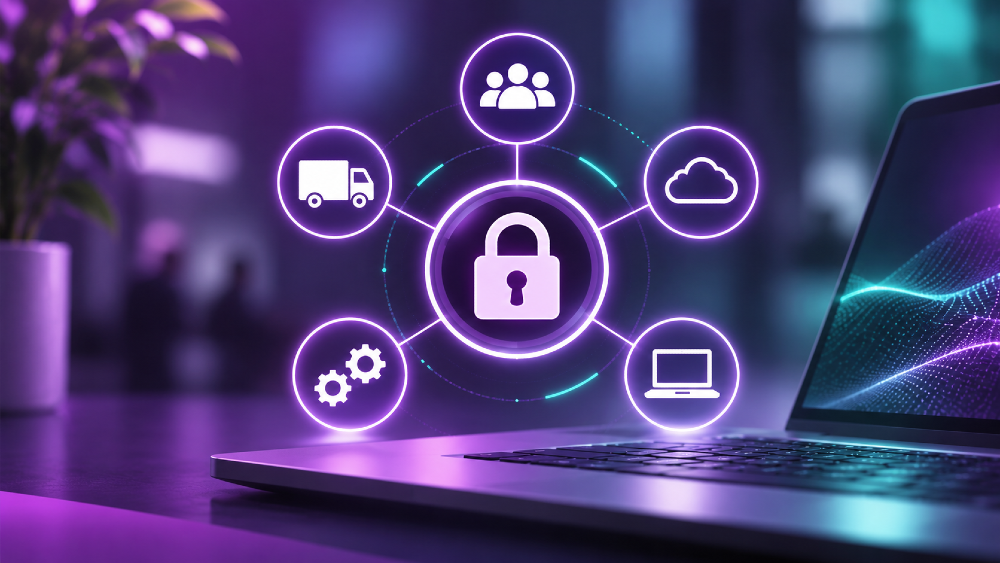
Who Can Access Your Business? Why Supplier Security Deserves a Closer Look
Jessica Entwistle
November 24 2026
Supplier Security | Third Party Risk | Business Resilience
Your organisation may have strong cybersecurity controls, well-managed employee access and clear processes for protecting sensitive information. But what about the organisations you work with?
IT providers, software vendors, managed service providers, outsourced support teams and other suppliers can all play an important role in keeping a business running.
Some also hold access to your systems, accounts, applications or data.
The question isn't simply whether you trust your suppliers. It's whether you understand what they can access, why they need that access and who is responsible for keeping it secure.
That's the focus of our upcoming free webinar, Supplier Security: Who Can Access Your Business?
Free Secarma Webinar
Supplier Security: Who Can Access Your Business?
Wednesday 9 December 2026 | 2pm UK
Understand supplier access, third-party risk and the practical steps organisations can take to strengthen security across their supply chain.
Why is supplier security such an important conversation in 2026?
Recent incidents have demonstrated how closely connected organisations have become, and how security responsibilities often extend beyond their own employees and systems.
On 23 November 2026, UK retailer Next disclosed that an incident involving a third-party online supplier had resulted in unauthorised access to some data relating to the business.
Next said that, based on its investigations at the time, there was no evidence that customer personal data had been compromised and that its own systems remained unaffected.
You can read more in Reuters' coverage of the Next supplier incident .
Just days earlier, reports emerged of a cyberattack involving a third-party vendor associated with major financial organisations, including JPMorgan, Visa and Mastercard.
The incident raised questions about information held by external providers and the potential exposure created by supplier relationships.
Read more about the November 2026 third-party vendor incident .
A business can invest heavily in its own security and still be affected by what happens elsewhere in its supply chain.
These incidents don't necessarily share the same cause or circumstances. However, they illustrate a common challenge.
For organisations that rely on external providers to support everyday operations, the important question is how well they understand those relationships and the access that comes with them.
What do we actually mean by supplier access?
Supplier access isn't always as obvious as someone logging directly into your network.
It might involve:
- An outsourced IT provider with administrator access to Microsoft 365.
- A software supplier connecting to customer information through an API.
- A managed service provider responsible for backups, monitoring or infrastructure.
- An external finance or HR provider processing confidential information.
- A contractor with a remote-access account created for a previous project.
- A cloud application with permissions to retrieve or share business data.
Many of these arrangements are entirely legitimate and necessary.
The challenge arises when organisations lose visibility of what has been granted, whether the permissions are still appropriate and how those connections are being protected.
A supplier may have been approved several years ago, but has anyone reviewed its access since?
If a supplier is trusted, why do we need to assess them?
Trust is an important part of any business relationship, but it doesn't replace the need for assurance.
A supplier might have excellent intentions, experienced staff and recognised certifications. That doesn't automatically tell you whether its access to your particular environment is appropriate.
It's useful to understand:
- What systems and information the supplier can access.
- Whether that access is limited to what it needs.
- How its staff authenticate and how privileged accounts are protected.
- Whether access is monitored and reviewed.
- What happens when someone leaves the supplier or changes role.
- How quickly your organisation would be notified if the supplier experienced a security incident.
These aren't questions designed to make supplier relationships difficult.
They're about creating clear expectations and helping both organisations understand their responsibilities.
Could a supplier have access that nobody remembers granting?
Yes, and it's an important reason to review supplier access regularly.
Consider an external IT provider originally brought in to support a migration.
During the project, its engineers may have been granted elevated permissions to configure systems, resolve technical problems and complete the work.
Once the migration finishes, the business moves on. The supplier relationship might continue in a smaller capacity, but the original permissions may remain unchanged.
Over time, more suppliers, contractors and applications can be introduced.
Without a consistent review process, it becomes difficult to answer a seemingly simple question:
Who outside our organisation can currently access our most important systems and information?
This is why supplier security should be treated as an ongoing responsibility rather than something completed when a contract is signed.
Does every supplier need the same level of security assessment?
No, and this is where a proportionate approach makes a real difference.
A supplier delivering stationery doesn't necessarily create the same cybersecurity exposure as a provider managing your cloud infrastructure or processing customer information.
Assessments should reflect the relationship and the potential business impact.
Four questions worth asking
1. What does the supplier provide?
Is the service business-critical, or could the organisation continue operating without it?
2. What access does the supplier need?
Does it require privileged access, access to sensitive data or connectivity to important systems?
3. What would happen if the supplier became unavailable?
Would it affect customers, internal operations, regulatory obligations or the ability to deliver services?
4. How dependent are we on this supplier?
Could the service be replaced or recovered, or would disruption create a significant operational challenge?
These questions help organisations focus deeper assessments on relationships that present greater risk.
This also reflects the approach recommended by the UK's National Cyber Security Centre, which encourages organisations to understand their supply chains and tailor security requirements to the risks involved.
You can explore the NCSC's supply chain security guidance here .
What should organisations be doing about supplier security?
The good news is that improving supplier oversight doesn't need to begin with a complicated programme.
A useful first step is to build a clear picture of the suppliers your organisation relies on.
From there, consider five practical actions.
Five practical steps to improve supplier security
1. Understand who your important suppliers are.
Identify organisations that support critical services, process sensitive information or maintain access to important systems.
2. Review what access they currently have.
Check accounts, administrative permissions, remote connections, applications and integrations. Confirm whether each remains necessary.
3. Establish clear ownership.
Every important supplier relationship should have someone internally responsible for reviewing the arrangement and raising concerns.
4. Agree what happens when something changes.
Access should be reviewed when contracts change, people leave, services are replaced or suppliers are no longer required.
5. Make supplier assurance an ongoing process.
Security questionnaires, appropriate certification, independent assessments, contract requirements and regular reviews can all help provide evidence that risks are being managed.
The aim isn't to eliminate every possible risk. It's to understand your exposure, make proportionate decisions and maintain confidence in the relationships your business depends on.
How can a Third Party Risk Assessment help?
For organisations managing multiple suppliers or particularly sensitive relationships, a structured assessment can provide a more complete picture.
At Secarma, our Third Party Risk Assessment service helps organisations understand the security posture of their suppliers and partners.
This includes reviewing how suppliers store, process and protect sensitive information, identifying areas where additional safeguards may be needed and assessing suppliers according to the risks they introduce.
Rather than treating every supplier in the same way, we help businesses prioritise based on factors such as access, business criticality and the potential impact of an incident.
The outcome is practical guidance that supports better decisions, clearer accountability and stronger relationships with the organisations you depend on.
Because supplier security shouldn't simply be about completing another questionnaire.
It should be about knowing which relationships matter most, where the risks sit and what to do next.
Need a clearer picture of your third-party risks?
Our Third Party Risk Assessment service helps you understand supplier security, identify gaps and prioritise practical improvements based on your business needs.
Want to understand who can access your business?
On Wednesday 9 December 2026 at 2pm, we're hosting a free webinar:
Supplier Security: Who Can Access Your Business?
We'll explore how organisations can gain better visibility of supplier access, understand where responsibilities sit and identify practical opportunities to strengthen oversight.
The session will look at common supplier access arrangements, permissions that may no longer be appropriate and how to build a more manageable approach to reviewing third-party relationships.
Whether you're responsible for IT, cybersecurity, compliance, procurement or business operations, the aim is to help you ask better questions and take practical steps to improve supplier security.
Free Webinar | Wednesday 9 December | 2pm UK
Supplier Security: Who Can Access Your Business?
Learn how to understand supplier access, strengthen third-party oversight and build greater confidence in the businesses you depend on.
Register for the free webinar →
Looking for support with your existing supplier relationships? Explore our Third Party Risk Assessment service .
Strong supplier security isn't about trusting your partners less. It's about understanding your shared responsibilities better.




Secarma Limited (Company no. 04217114, registered in England & Wales)
Registered office: 3 Archway, Birley Fields, Manchester, M15 5QJ
VAT no. GB 775 7144 00